In modern legal workflows, technology plays a central role in capturing, managing, and utilizing information. As proceedings become more digital and distributed, court reporting software has become a crucial component of the legal ecosystem.
But not all platforms are built the same.
A platform’s design, including its architecture, integration, and underlying approach, directly impacts reliability, efficiency, and long-term performance, even when solutions appear to offer similar features.
At DepoDash, we believe understanding these differences is essential when evaluating court reporting software. To better understand how reliability is defined across modern court transcription services, it’s important to consider how platforms are built to support legal workflows from start to finish.
What Is Court Reporting Software?
Court reporting software is a robust tool that captures, manages, and provides access to transcripts, audio, video, and exhibits. These platforms provide:
- Real-time access to proceedings
- Searchable transcripts and records
- Integration with audio and video
- Collaboration tools for legal teams
These capabilities turn raw legal data into structured and accessible information, driving stronger case preparation and better decision-making.
Why Platform Design Matters More Than Features
Most court reporting platforms look alike at first. They promote similar features like transcription, recording, and collaboration. The key difference is how they deliver these features.
Developers combine multiple tools or acquire technologies to build some platforms. This approach accelerates development but also introduces the following:
- Fragmented workflows
- Inconsistent performance
- Limited control over system behavior
Platforms built as unified systems provide a more seamless and reliable experience.
Built Not Bought: Why Architecture Defines Performance
A key distinction in court reporting software is that it is either built from the ground up or assembled from separate components. Purpose-built platforms offer the following:
- Unified workflows across all features
- Greater consistency in performance
- Better control over transcription and processing
- A more intuitive user experience
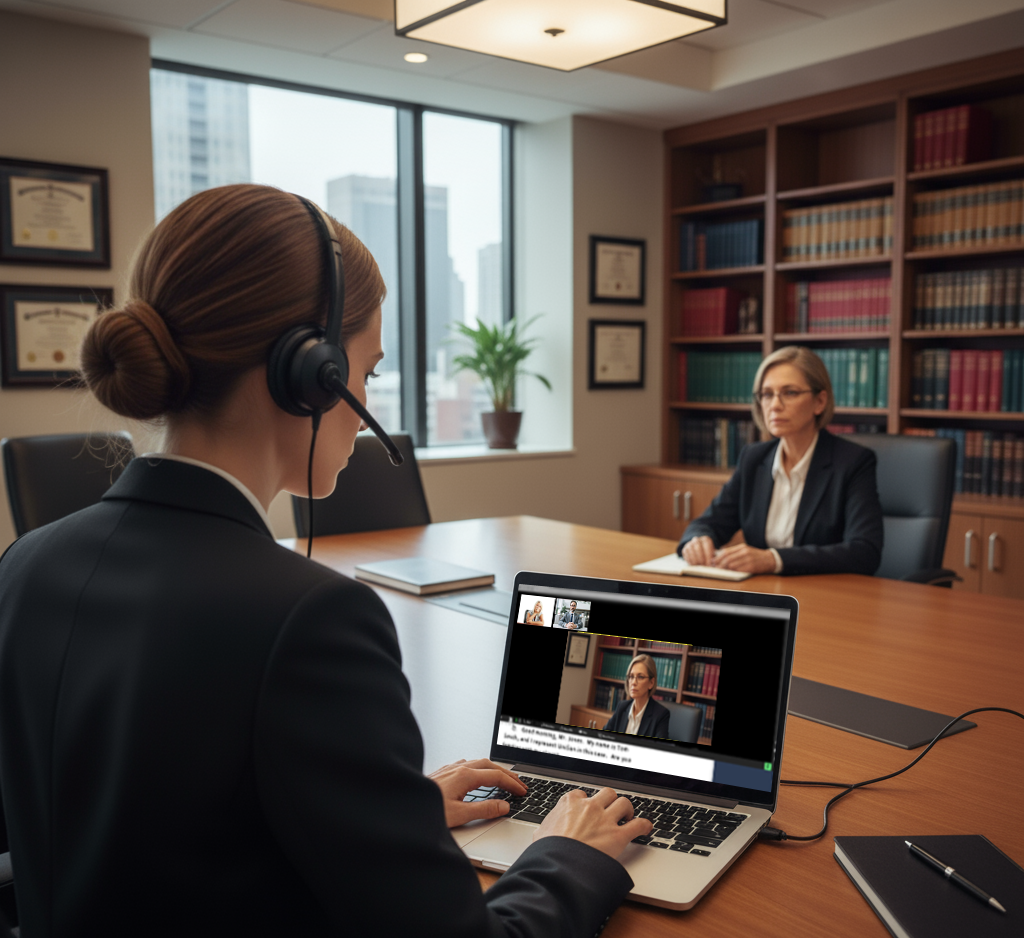
Modern legal platforms consolidate deposition tools, including audio, video, transcription, and exhibits, into one interface, improving efficiency and usability.
At DepoDash, we follow a built-not-bought approach. Our platform is designed by legal professionals to align with real-world legal workflows.
What Makes Court Reporting Software Truly Effective
Evaluate court reporting software by examining the key factors that drive performance, rather than just surface-level features.
Unified Workflow Integration
A strong platform connects all components (transcription, audio, video, and case materials) into a unified system, eliminating friction and boosting efficiency.
Accuracy And Context Awareness
Legal transcription demands precision, particularly with technical terminology and multi-speaker environments. AI-driven platforms trained on legal language can significantly improve accuracy and consistency.
Real-Time And Audio Support
Modern court reporting software must support real-time transcription and audio-based workflows. These capabilities play distinct but complementary roles in legal proceedings, and their inclusion is essential for effective transcription production and management.
Searchability And Accessibility
Legal professionals can search, tag, and organize transcripts to rapidly find critical information for editing, ruling, witness examination and more.
Security And Compliance
Platforms incorporate strong security measures and comply with industry standards to protect sensitive legal data.
How Modern Platforms Support Legal Workflows
The digital transformation of the legal industry drives the evolution of court reporting software.
Today’s platforms enable the following:
- Realtime proceedings
- Remote and hybrid legal proceedings
- Faster access to transcripts and case materials
- Improved collaboration across teams
- Reduced reliance on manual processes
Cloud-based systems enhance accessibility and efficiency for legal professionals by providing secure access to records from anywhere.
Are All Court Reporting Platforms Really The Same
The underlying architecture of each platform creates meaningful differences in performance and reliability. Platforms built through integrations often rely on multiple tools working together, which can introduce complexity over time.
Purpose-built platforms, on the other hand, are designed to operate as a cohesive system. This approach supports:
- Greater stability
- More predictable performance
- A smoother user experience
Legal workflows require higher levels of accuracy and efficiency as they scale, and these differences become crucial.
The Role Of Integration In Platform Performance
Integration is a strength, but not all integrations are equal. We make a clear distinction between the following:
- Platforms that integrate multiple external tools
- Platforms that are natively integrated from the ground up
The first approach introduces dependencies and inconsistencies. The second approach creates a controlled and reliable environment.
At DepoDash, we use native integration to ensure all platform components work together seamlessly, eliminating the need for disconnected systems.
What To Look For In Court Reporting Software
Evaluate platforms beyond their feature lists. It’s important to assess the following:
- Is the platform purpose-built or assembled from multiple tools.
- Does it provide a unified workflow across all functions?
- Can it support both real-time and audio transcription seamlessly.
- Is it designed specifically for legal workflows?
- Is it accurate and secure?
- Does it deliver consistent performance at scale?
These factors determine long-term reliability and usability.
To explore this further, read our guide on court transcription services and what defines reliable platforms in modern legal workflows.
The Future Of Court Reporting Software
Court reporting technology is evolving rapidly as AI and cloud-based systems drive innovation. The future will be shaped by platforms that:
- Offer fully integrated, end-to-end solutions
- Combine automation with legal expertise
- Provide seamless access to real-time and recorded data
- Maintain a strong focus on accuracy and reliability
Legal workflows are becoming increasingly complex, and purpose-built platforms are now essential.
In Summary
Not all court reporting platforms are built the same and that difference matters. A platform’s design drives accuracy, efficiency, scalability, and user experience. The underlying architecture determines the performance of features in real-world legal environments, setting exceptional solutions apart from similar ones.
At DepoDash, we build reliable court reporting software with intention, from the ground up, to meet the specific needs of legal professionals.
If you are evaluating court reporting software, understanding how platform design influences performance can help you make more informed decisions.
Frequently Asked Questions
What is court reporting software?
Court reporting software captures, manages, and provides access to transcripts, audio, video, and case materials in one system, streamlining work for legal professionals.
How is court reporting software different from transcription tools?
Court reporting software transforms transcription by integrating workflows, providing real-time access, and driving collaboration across legal teams.
Why does platform architecture matter in court reporting software?
A platform’s construction directly impacts its reliability, performance, and scalability. Purpose-built systems deliver more consistent results than assembled solutions, often making them a more consistent and reliable option.
Does court reporting software support real-time transcription?
Modern platforms support real-time transcription and audio-based workflows, providing immediate access and refined final records.
What should I look for in court reporting software?
Choose a platform that is built for a purpose, integrates all workflows, supports legal use cases, and delivers consistent performance with strong security standards.