In modern legal workflows, speed and accuracy are no longer competing priorities. With legal proceedings becoming more digital and distributed, the need for instantaneous access to information has risen dramatically.
Real-time transcript production has emerged as a powerful solution to meet this need. At DepoDash, we focus on reliable methods to build a strong, reliable transcription strategy.
To assess modern court transcription services, it’s important to understand how different transcription methods work together within a unified platform.
What Is Real-Time Transcript Production
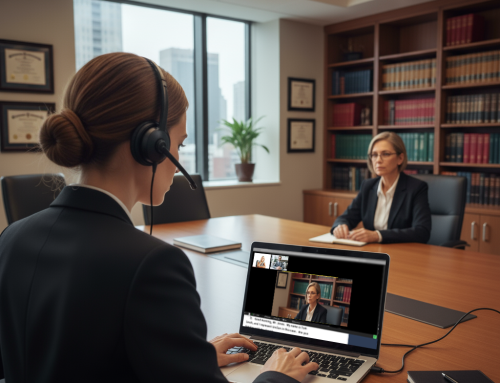
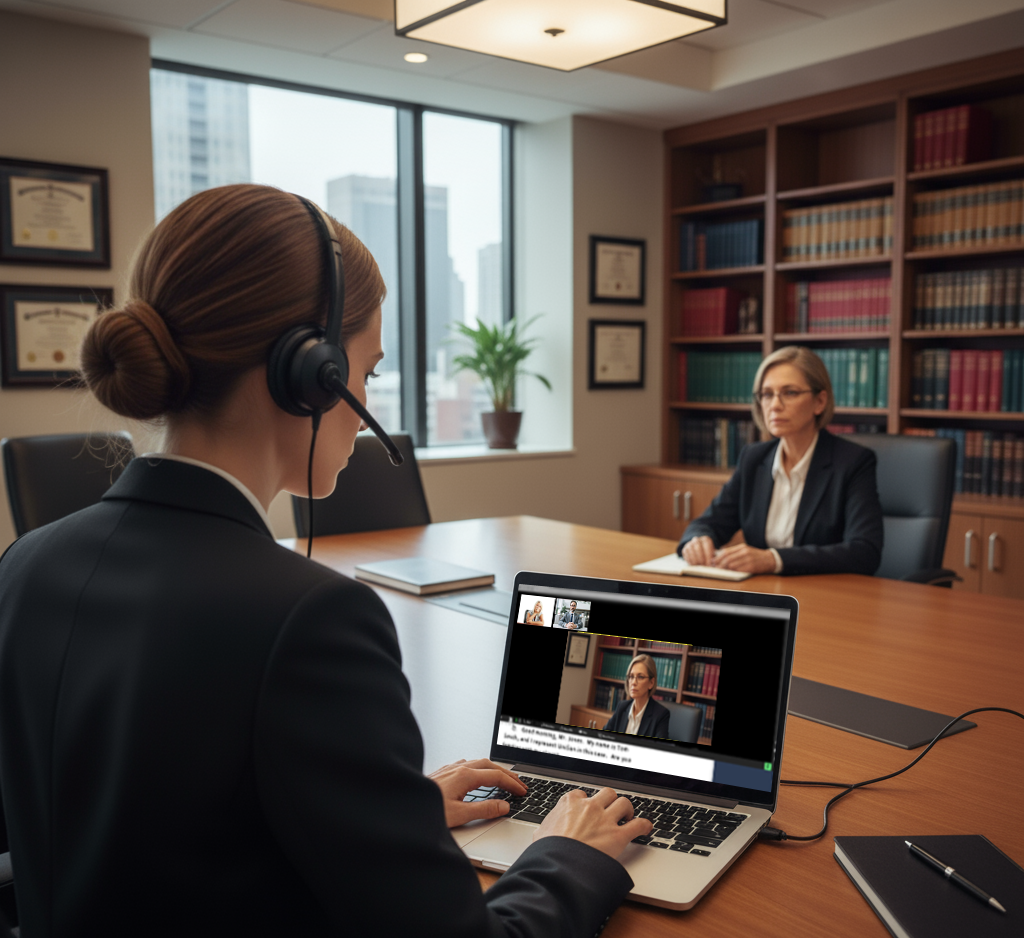
Real-time transcript production involves converting spoken words into written text instantly as they are being spoken.
By combining sophisticated speech recognition with AI technology, real-time transcription is able to provide live text output during events like depositions, hearings, and meetings. This way, participants have the ability to view, search, and refer to the spoken content in real-time.
Why Real-Time Transcription Matters In Legal Workflows
Immediate access to information is the main advantage of real-time transcription.
Instant Monitoring Of The Proceedings
Lawyers and other legal personnel are able to keep up with what is being said as it happens, which aids in remembering the most important points of the discussion that are made.
Accelerated Decision-Making
Getting transcripts quickly helps legal professionals respond to situations without delay, and respond or rule faster and accurately.
Boosting Teamwork
Real-time text helps everyone in the case stay connected and informed, even from different places.
Greater Accessibility
Besides including people with hearing difficulties, a live transcript also helps overcome language barriers and makes the court system more open to everyone.
Here, real-time transcription extends beyond just being a nice-to-have feature; it acts as a key element of the entire process.
How Real-Time And Audio Transcription Work Together
One of the most typical misunderstandings is that real-time and audio transcription have the same function. But in fact, they are meant to assist different parts of the legal process.
Real-time transcription offers:
- Instant availability of the speech in text format
- Live cooperation and transparency
- Quicker decision-making during a session
Audio transcription enables:
- More in-depth processing and enhancement
- Higher uniformity in the final transcripts
- Accurate records for official documentation
The methods listed above are not in competition. These approaches are not competing; they are complementary components of a complete legal transcription workflow.
At DepoDash, we see most legal professionals use real-time transcription for immediate visibility while relying on audio-based transcription for finalized, highly accurate records.
What To Look For In Real-Time Transcription Software
Not all real-time transcription solutions offer the same level of performance. When choosing a platform, it is crucial not to rely solely on surface features.
Performance In Live Scenarios
A good transcription platform can handle changing audio conditions. It won’t struggle if the audio is a bit unpredictable.
Seamless Workflow Integration
The real-time transcript should easily fit into the next steps of post-processing and audio transcription workflows.
Accuracy Enhancement
Getting good results in live situations relies on advanced AI models. These models need constant updates and upgrades.
Privacy, Safety, and Compliance
Strong security practices are a must in the legal domain, where most data is sensitive. Organizations must also ensure their transcription tools meet privacy and compliance standards.
Dedicated Architecture
Purpose-built systems provide greater consistency and control. This is different from systems made up of several separate tools.
At DepoDash, our system focuses on real-time and audio transcription integration. It offers a unified solution, ensuring all workflow phases create a smooth user experience.
Built Not Bought: Why Platform Design Matters
The design of a transcription platform largely determines its dependability.
A lot of software available on the market is the result of mixing different existing technologies. Although this way can reduce the time of development, it may result in scattered workflows and varied outcomes.
However, a specially prepared platform can provide:
- Integrated/unified workflows
- More power over processing
- Uniform performance in a variety of scenarios
Unlike platforms assembled through multiple integrations or acquisitions, a purpose-built system delivers consistency that is difficult to replicate.
DepoDash is a platform built by legal professionals from scratch. This lets us build workflows that match real legal situations. We don’t have to change generic tools to meet complex needs.
Real-time transcripts are a live tool for speakers and participants. They help with instant understanding and follow-up. In fact, in many legal situations, they are considered a rough draft rather than a finished document.
Legal standards often see real-time production as draft text. In contrast, official transcripts require validation and editing.
Real-time transcription can be a big advantage when done right. With the right procedures in place, it helps rather than poses a threat.
The Role Of AI In Improving Real-Time Transcription
With progress in AI, real-time transcription technologies are continually enhanced. Nowadays, systems generally depend on:
- Natural Language Processing (NLP) that helps machines understand context in human conversations
- Speaker recognition technology, which enables the transcription of dialogues involving multiple speakers
- Modeling techniques that learn and get better continuously
- Companies should also assess AI software. This helps ensure the tools meet accuracy, security, and compliance needs.
Therefore, it is platform design and continuous control that ensure the reliability of these systems.
When To Use Real-Time Transcription In Legal Work
Real-time transcription really shines in places where getting the text right away is a priority. The best scenarios to use real-time transcription:
- Live depositions where everything is said on the spot
- Court hearings that are going on right now
- Remote or virtual court sessions
- Strategic talks during the actual workings
If you can get to the info right away, usually both work and the quality of the decisions can be improved.
For the final output, use real-time transcription and audio-based processing together. This gives you the most accurate results.
The Future Of Real-Time Transcript Production
As AI and legal technology evolve, real-time transcription is set to become an essential part of legal workflows. Future platforms will aim at:
- Deep integration of various transcription methods
- Higher accuracy of transcripts in live settings
- Better collaboration features
Efficient solutions will see real-time transcription and audio transcription as one system, not as separate tools.
At DepoDash, we believe in tools that can do both. They provide quick results when you need them and offer precision where it counts.
To Sum Up
Real-time transcript creation is critical. When used correctly, it offers a live view, helps teams collaborate, and allows for quicker, informed decisions during legal events. Using audio transcription helps finished documents meet high accuracy and trust standards.
We at DepoDash think that the best way to be reliable is to unite these features inside a platform that is, in fact, made for legal workflows only.
If you are evaluating real-time transcription as part of your legal workflow, exploring a platform that seamlessly integrates both real-time and audio capabilities can help you achieve better accuracy, efficiency, and long-term reliability.
FAQs
What is real-time transcript production?
Real-time transcript production is the conversion of spoken language into written text immediately during live events, providing the audience with an opportunity to see and follow the content simultaneously.
Is real-time transcription accurate for legal use?
Today’s systems can be very accurate, but how well they do may depend on the quality of the sound. They are usually combined with editing done after the transcription for the final version.
How does real-time transcription help legal teams?
It not only gives quick access to information but also helps with collaboration. Plus, it speeds up decision-making during live sessions.
Is real-time transcription better than audio transcription?
They are for different things. Real-time transcription is great for quick access. Audio transcription is better if you want to refine and create a consistent final document.
What should I look for in real-time transcription software?
Look for a platform that offers stability and precision. It should fit smoothly into your workflow without hassle. Also, it must have strong security and be designed for legal use.