
DepoDash University
Welcome to the DepoDash University. Navigate the tabs below to find training tools and materials specific to your needs.
| Introduction to Workflow Management for Individual Users. |
Introduction to Workflow Management for Enterprise and Agency Users. |
|---|---|
| |
|
| Live Realtime Reporting Quick Start Instructions |
Transcribing Audio Files |
| |
|
| DepoDash Editor | Complete DepoDash Instructions for Court Reporters and Transcribers |
| |
|


| Judges | Transcribers | Basic Features |
|---|---|---|
 |
 |
 |
- All
- ADA Compliance
- Cost
- DD Realtime
- DepoDash Transcription
- DepoDash University
- DepoDash Workflow
- Digital Court Reporting
- Features
- Overview
- Platform
- Remote-v02
- Security
- Transcribe Audio Files
- Why DepoDash
- Workflow
DepoDash is an AI-powered cloud digital court reporting system that provides efficient, affordable, and accurate transcripts from any device. It is the brainchild of ProCAT, a leading court reporting company with over 40 years of experience.
DepoDash’s transcripts, including rough drafts and final transcripts, are produced in legal transcript format suitable for hearings, depositions, arbitrations, court, and any other legal proceeding where a transcript is required.
There are many benefits to using DepoDash, including:
- Efficiency: DepoDash can transcribe recordings in real time, which saves users time and money.
- Accuracy: DepoDash’s AI-powered transcription is highly accurate.
- Affordability: DepoDash is more affordable than traditional court reporting services.
- Convenience: DepoDash can be used from any Windows device with a browser and webcam.
The cost of using DepoDash varies depending on the length of your deposition and the number of participants. DepoDash offers a variety of pricing plans to fit your needs. You can get started with a free plan and then upgrade to a paid plan as needed.
The process for a live environment is very similar to using Zoom or any other online conferencing platform.
- Log in as a registered user or as a guest
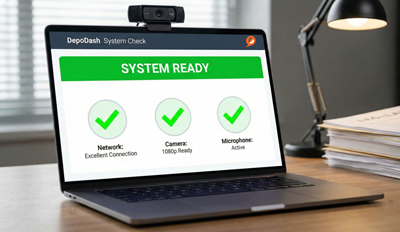
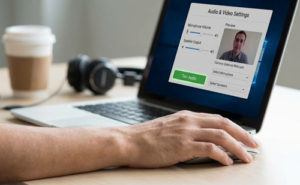
- Turn on your video camera and microphone
- DepoDash will automatically identify each speaker with the proper names and everything that is said during the proceedings.
- Export a rough draft after the proceedings conclude.
The process for uploading an audio file to DepoDash involves the following stages:
- Uploading an audio file
- Identifying the speakers
- Assigning the speakers
- Reformatting to Question/Answer format (optional)
The platform is available on demand when you need it, where you need it, no matter where the participants are located on the globe. All you need is a personal computer and an Internet connection.
DepoDash is the fastest and easiest way to automatically generate a transcript for legal or other types of proceedings. It is a “one-stop shop” for all of your transcription needs.
All of them! In remote proceedings, channel separation and the identification of all speakers is automatic. In hybrid and live environments, multi-speaker diarization is used to identify each of the speakers.
Digital court reporting refers to using technology to create an electronic record of court proceedings. In traditional court reporting, stenographers use shorthand and specialized machines to transcribe spoken words into written text. Digital court reporting, on the other hand, involves using digital audio recording equipment and computer software to capture and transcribe court proceedings.
Here are some key aspects of digital court reporting:
- Audio Recording: Digital court reporters use audio recording equipment to capture all spoken words during court proceedings. This could include the judge, attorneys, witnesses, and other parties involved.
- Voice Recognition Software: Once the audio is recorded, voice recognition software is often employed to automatically transcribe spoken words into text. This software can be trained to recognize specific voices and legal terminology.
- Editing and Annotation: Digital court reporters can edit and annotate transcripts easily using specialized software. This allows them to correct errors in the automated transcription and add relevant annotations or comments.
- Real-Time Transcription: Some digital court reporters can provide real-time transcription services. This means the transcribed text is available almost immediately during the court proceedings. This can benefit attorneys, judges, and other participants who need quick access to the record.
- Search and Retrieval: Digital transcripts can be stored electronically, making it easier to search, retrieve, and organize information. This can save time and resources compared to traditional paper transcripts.
- Remote Access: Digital court reporting can facilitate remote access to court proceedings. With the use of video conferencing technology, reporters and other participants can connect remotely and still have access to real-time transcripts.
Digital court reporting is an alternative to traditional court reporting. It’s important to note that the acceptance and adoption of digital court reporting may vary among jurisdictions, and some courts still rely on traditional stenographic or voice methods or a combination of both.
DepoDash is a comprehensive transcription workflow ecosystem designed for both individual transcribers and large organizations (like courthouses and court reporting agencies). It streamlines the entire process from audio upload and speech-to-text conversion to editing, proofreading, certification, and secure long-term storage of legal transcripts.
DepoDash is ideal for solo transcribers seeking an efficient, all-in-one platform for their work, and for enterprise-level organizations needing a secure, managed, and auditable workflow for multi-stage transcript production across various roles.
Yes, DepoDash operates as a secure, cloud-based platform that can be accessed from anywhere with an internet connection, ensuring flexibility and scalability.
Solo transcribers can upload audio, convert speech to text, edit transcripts online using the DD Editor, or export files in RTF format to their preferred word processor (e.g., MS Word) or CAT software (e.g., ProCAT Winner). It also provides secure long-term storage for completed jobs.
Absolutely. You can export your draft transcript from DepoDash in RTF format, which is compatible with popular CAT software like ProCAT Winner, allowing you to leverage your existing tools and workflows.
DepoDash provides a structured, multi-level workflow that assigns specific roles (e.g., Intake Officer, Scheduler, Transcriber, Proofreader, Certifier, Production Team, Record Retrieval) with defined rights. This ensures controlled, efficient, and secure transcript production and delivery.
DepoDash employs Role-Based Access Control (RBAC) to limit user permissions to their specific functions. It also maintains a comprehensive audit log of all workflow touchpoints and uses a robust versioning system to track changes by role, ensuring transparency and accountability.
The audit log records every interaction and change within the workflow, detailing who did what and when. The versioning system allows you to see successive iterations of a transcript, highlighting changes made by different roles (e.g., editing, proofreading) before and after each function, providing an immutable record of the transcript’s evolution.
DepoDash is built with integration capabilities in mind. (Further details on specific integration APIs and methods can be provided upon request and will be detailed in technical documentation.)
No. DepoDash is a “zero-footprint” solution, meaning our court reporting software is entirely web-based. Unlike traditional systems that require expensive proprietary hardware or complex IT setups, you only need a standard PC or Mac with a webcam and an internet connection to host or join a professional-grade legal proceeding.
The DepoDash transcription platform utilizes advanced AI and machine learning to automatically identify speakers by name in real time. As testimony is given, the text is streamed instantly to all authorized participants, allowing those with permission, the ability to search for keywords, add private annotations, and request immediate read-backs without interrupting the flow of the session.
As a dedicated verbatim reporting platform, DepoDash is built from the ground up specifically for the legal industry, rather than being a “piecemeal” adaptation of generic conferencing tools. It integrates multi-channel audio recording with professional monitoring by a certified reporter to ensure that every “um,” “ah,” and critical testimony detail is captured with 100% accuracy and legal integrity.
Yes. Our platform is designed to be flexible for remote, in-person, or hybrid environments. It acts as a centralized hub where the official record is captured securely in the cloud, ensuring that whether a witness is in the room or across the country, the final transcript remains consistent and fully synchronized with the audio and video records.
Security is paramount for any legal-grade platform. DepoDash employs 256-bit encryption for all data, including video, audio, and exhibits, both at rest and in transit. We use granular, role-based access controls to ensure that only verified participants (Attorneys, Schedulers, or Transcribers) can access the sensitive information relevant to their specific role in the case.
While generic AI tools provide a rough idea of what was said, professional court transcription services like DepoDash are purpose-built for the legal industry. Unlike standard “speech-to-text” tools, DepoDash handles legal-specific formatting (line numbering, Q&A formatting, and timestamps) and allows attorneys to make real-time annotations and private issue codes, making the transcript immediately useful for trial preparation.
Many online legal transcription services are simply “black boxes” where you upload a file and hope for the best. DepoDash offers a transparent, all-in-one workspace that integrates with your existing workflow. It enables high-quality audio capture, real-time voice-to-text transcription (in person or remotely), immediate rough drafts, and automatic transcription of audio/video files. By choosing a specialized platform, you gain a professional-grade legal record that adheres to industry procedural standards.
With a nationwide decline in available stenographers, many firms are shifting to Digital court reporting to maintain their case schedules. DepoDash provides a high-tech ecosystem where digital reporters can capture high-fidelity audio and video, while the platform’s AI generates a real-time transcript. This hybrid approach ensures that a certified human professional is still “protecting the record” while leveraging modern technology to fill the gap left by traditional methods.
Yes. DepoDash is not just for live events; it offers comprehensive legal audio transcription services for existing recordings. Users can upload audio files from depositions, hearings, or interviews, and the platform’s AI-powered engine will identify speakers and generate a formatted transcript in minutes. This can then be edited and certified by a legal transcriber directly within the DepoDash Editor.
Security is a top priority when using legal video transcription tools. DepoDash uses 256-bit encryption for all data in transit and at rest. When transcribing video testimony, the platform maintains a strict chain of custody and role-based access, ensuring that only authorized participants can view the video and its corresponding transcript, which is crucial for sensitive or confidential litigation.
Unlike standard captioning, our real-time transcription uses specialized AI designed to isolate multi-speaker audio and identify colloquy and Q & A instantly and automatically. This allows participants to follow along with a scrolling text feed, search for specific spoken words, and add private notes to specific testimony lines while the proceeding is still in progress.
While many remote deposition services rely on third-party video tools with legal “add-ons,” DepoDash is a purpose-built ecosystem. It integrates high-definition video conferencing with a proprietary editor, professional exhibit sharing, and secure “huddle rooms” for private counsel. This ensures that the official record remains synchronized and legally defensible from the start of the session to the final delivery.
Yes. Our platform is a comprehensive tool for both live and post-production work. You can easily transcribe audio and video files by uploading them to our secure cloud. The AI engine processes the media to create a formatted, timestamped transcript that can then be edited, proofread, and certified by your team using our integrated DD Editor.
DepoDash is a “zero-footprint” remote legal platform. There is no software to download or install, which eliminates technical hurdles for witnesses or guest attorneys. Participants simply click a secure link to join via any modern web browser, ensuring that security protocols are maintained without the IT risks associated with local software installations.
Generic virtual conferencing services often lack the necessary features for a formal legal record, such as line-numbered transcripts, speaker diarization, and exhibit sharing. DepoDash provides a “one-stop shop” specifically for the legal industry, offering predictable pricing and a workflow that mirrors traditional legal transcription production, which significantly reduces cost and logistical stress.
By utilizing AI-powered transcription software, DepoDash creates a highly accurate foundational rough draft in minutes. Unlike general-purpose tools, our software is trained specifically for legal formatting and multi-speaker environments, ensuring that the initial text capture is as close to verbatim as possible before a human transcriber even begins the final review.
Absolutely. DepoDash is designed for automated legal transcription at scale. Reporting agencies, reporters, transcribers, and scopists can upload multiple audio or video files simultaneously. The platform’s multi-role workflow then allows teams to assign specific roles, such as transcribers, proofreaders, and certifiers, to manage the production of finalized, court-ready transcripts with unmatched speed.
Most users consider DepoDash the best tool to transcribe audio files because it doesn’t just provide text; it provides a specialized legal ecosystem. The integrated “DepoDash Editor” allows you to play back synchronized audio while editing, ensures proper legal formatting (line numbering and speaker ID), and maintains a secure chain of custody that generic services cannot match.
Yes. DepoDash is designed to be highly compatible with the diverse media types used in legal environments. Our platform supports a wide array of file extensions, including:
- Common Audio: MP3, M4A, WAV, and WMA.
- Video Formats: MP4, MOV, AVI, MKV, and WMV.
- Specialized Formats: ASF, OGG, RMA, RMV, and WEBM.
This extensive support allows you to upload everything from standard deposition recordings to specialized digital evidence files without needing to convert them first, ensuring a faster transition from raw media to a formatted legal transcript.
Yes, the platform is versatile enough to be used as a YouTube video transcript tool for legal research or evidence gathering. By downloading the audio/video from a public source and uploading it to DepoDash, you can generate a timestamped, searchable transcript that makes it easy to cite specific statements or moments in a legal brief or during a trial.
Absolutely. DepoDash is a flexible ecosystem designed to support the entire spectrum of the industry. Whether a firm uses stenography, voice writing, or digital reporting, the platform serves as the centralized hub for capturing the spoken word and delivering the final record, making it the most versatile solution for agencies, independents, courthouses, and law firms transitioning to a digital-first workflow.
DepoDash is a leading cloud-based court reporting and transcription production solution that eliminates the need for bulky on-site hardware. By hosting the entire proceeding in a secure cloud environment, reporters and legal professionals can collaborate in person or from any location, accessing live feeds and synchronized exhibits through a standard web browser without any software downloads.
Unlike traditional methods, where you wait days for a draft, our transcription technology provides immediate results. The platform streams text as it is spoken, allowing legal professionals to review testimony on the fly, mark key moments for follow-up questions, and leave the session with a searchable “rough draft” record ready for immediate use.
Yes. Our real-time court reporting feature allows every authorized participant, whether they are in the room or working remotely, to view the live transcript stream on their own device. This transparency ensures all parties are on the same page and allows for instant “read-backs” without requiring the reporter to stop the proceedings.
Security is a core component of our real-time transcription software. Every word streamed is protected by 256-bit encryption. Additionally, the platform offers “huddle rooms” and private annotation features, ensuring that while the transcript is shared, your confidential notes and attorney-client discussions remain completely private and inaccessible to other parties.
DepoDash is specifically engineered to help law firms and government agencies satisfy ADA requirements for services by ensuring that all participants, regardless of hearing ability, have equal access to the record. Our platform provides high-accuracy, real-time text streaming that allows individuals who are deaf or hard of hearing to follow proceedings with the same level of detail as any other participant.
Yes. DepoDash functions as a comprehensive ada compliance service for the legal industry. By integrating high-definition video with low-latency real-time transcription, we provide a “zero-barrier” environment. This ensures that courtrooms and deposition suites remain compliant with federal accessibility mandates without needing to patch together multiple third-party tools.
Absolutely. DepoDash is designed to host and facilitate CART services (Communication Access Realtime Translation). Whether you are using a human CART provider or our advanced AI-driven transcription, the platform delivers a “word-for-word” text stream to any device, making it an essential tool for providing immediate accessibility during complex litigation.
DepoDash allows agencies to streamline CART services by providing a unified, cloud-based dashboard. Instead of setting up complex hardware for every accessible session, providers can simply log in to the platform to broadcast real-time captions to all attendees. This centralized approach reduces setup time, eliminates technical friction, and ensures a consistent experience for the end-user.
Yes. Our commitment to accessibility extends through the entire lifecycle of a case. During live sessions, we provide real-time streaming text for immediate access. For post-proceeding needs, our platform ensures that all archived video and audio files can be processed into fully accessible, searchable transcripts, helping firms maintain long-term compliance with digital accessibility standards.
The DepoDash Workflow Ecosystem is an end-to-end transcription management platform designed for legal professionals. It covers every stage of transcript production from audio ingestion and AI-powered speech-to-text conversion through editing, proofreading, certification, and final delivery. It serves both solo transcribers and large-scale enterprise organizations, such as courthouses and reporting agencies.
DepoDash uses Role-Based Access Control (RBAC) to assign specific permissions to each team member based on their function, such as Intake Officer, Scheduler, Transcriber, Proofreader, Certifier, or Production Team. This ensures users have access only to the tools and data relevant to their role, maintaining security and a clear chain of custody throughout the workflow.
DepoDash maintains comprehensive audit logs that record every interaction and change within the workflow, tracking who did what and when. Its smart versioning system preserves successive iterations of each transcript, highlighting changes made at every stage. This creates an immutable, transparent record of the transcript’s evolution from draft to certified final product.
Absolutely. Solo transcribers can upload audio files directly, generate AI-powered rough drafts in minutes, and refine transcripts using the built-in DepoDash Editor. Finished work can also be exported in RTF format for use with MS Word or CAT software like ProCAT Winner. Completed transcripts are securely archived in the cloud for reliable long-term storage and retrieval.
Yes. DepoDash supports flexible integration with your current tools. Transcripts can be exported in RTF format, making them compatible with popular word processors and Computer-Aided Transcription software like ProCAT Winner. This allows professionals to leverage DepoDash’s AI-powered drafting and cloud workflow while continuing to use the editing tools they already know and prefer.